1. Introduzzjoni u Fuqview
The Zoom PodTrak P4next is a portable podcast recorder designed for high-quality audio capture and production. This device offers a comprehensive solution for podcasters, featuring multiple inputs, advanced audio processing, and flexible recording options. Its compact design and battery power capability make it suitable for both studio and on-the-go recording environments.
Karatteristiċi ewlenin:
- Kwalità Awdjo Superjuri: 4 XLR inputs with -125 dBu EIN for professional-grade recordings.
- Portabbiltà Mtejba: Lightweight (10.58 oz / 300g) and compact (4.95 x 4.72 x 1.57 inches) for mobile use.
- Ħajja Estiża tal-Batterija: Up to 8.5 hours of continuous recording with lithium batteries.
- Durabilità Robusta: Sturdy construction for demanding environments.
- Intuitive Ease of Use: Clear 128 x 64 OLED display and user-friendly controls.
- Effetti Inkorporati: AI Noise Reduction, Tone, and Compression.
- Konnettività versatili: Phone input for call-in guests, USB audio interface mode.
- Kuxxinetti tal-Ħoss: Customizable sound pads for instant playback.
2. Setup
2.1 It-Tħaddim tal-Apparat
The PodTrak P4next can be powered in multiple ways:
- Batteriji AA: Insert 2 AA batteries into the battery compartment located on the underside of the device.
- Qawwa USB-C: Connect a USB-C cable to the DC 5V port on the side of the unit and to a compatible USB power adapter or power bank.

Figura 2.1: Wara view of the PodTrak P4next, illustrating the battery compartment for 2 AA batteries.

Figura 2.2: Ġenb view of the PodTrak P4next, highlighting the microSD card slot and USB-C power input.
2.2 Konnessjoni ta' Mikrofoni
The PodTrak P4next features 4 XLR inputs for connecting microphones. These inputs provide phantom power for condenser microphones.
- Connect your XLR microphones to the corresponding input jacks (1-4) on the top of the device.
- Ensure phantom power is enabled for condenser microphones via the dedicated switches if required.

Figura 2.3: Quddiem view of the PodTrak P4next, displaying the four XLR microphone inputs at the top.
2.3 Konnessjoni tal-headphones
Four independent headphone outputs are available for monitoring.
- Plug your headphones into the 3.5mm jacks (1-4) located on the front edge of the device.
- Each output has an individual volume control knob.

Figura 2.4: Ġenb view of the PodTrak P4next, illustrating the four headphone output jacks and their respective volume controls.
2.4 Inserting SD Card
The PodTrak P4next records directly to an SD card.
- Open the microSD card slot cover on the side of the device.
- Insert a microSD card (up to 1TB supported) until it clicks into place.
Figura 2.5: Ġenb view of the PodTrak P4next, indicating the microSD card slot for recording media.
2.5 Connecting to Phone/Computer
The device supports external connections for various recording scenarios.
- Input tat-Telefon: Use a TRRS cable to connect your smartphone to the dedicated phone input for recording call-in guests.
- Interface Awdjo USB: Connect the PodTrak P4next to a computer via USB-C to use it as an audio interface for recording directly to your digital audio workstation (DAW).

Figure 2.6: The PodTrak P4next connected to a smartphone, demonstrating its capability to integrate phone calls into your podcast.
3. Operating the PodTrak P4next
3.1 Reġistrazzjoni Bażika
Biex tibda tirrekordja:
- Ensure microphones and headphones are connected and powered.
- Adjust the gain knobs for each microphone input to achieve optimal levels, avoiding clipping.
- Agħfas l-aħmar REKORD button to start recording. The button will illuminate.
- Agħfas il- REKORD buttuna għal darb'oħra biex tieqaf tirrekordja.
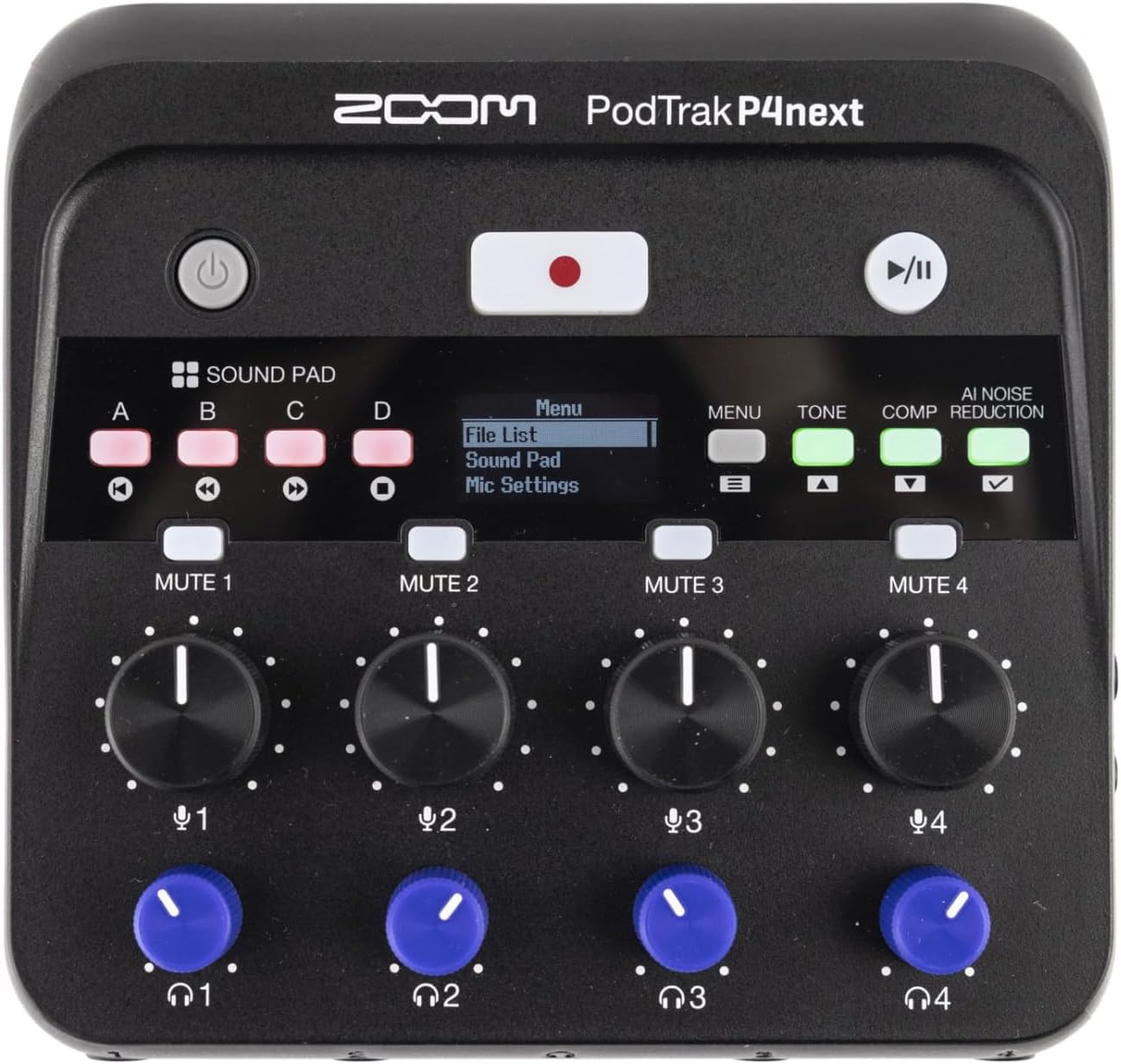
Figura 3.1: Minn fuq għal isfel view of the PodTrak P4next, highlighting the main controls including the record button and input gain knobs.
3.2 Sound Pads
The four sound pads (A, B, C, D) can be used to trigger pre-recorded audio clips or sound effects during your podcast.
- Press a sound pad button (A, B, C, or D) to play the assigned sound.
- Adjust the volume of the sound pads using the dedicated knob.
3.3 Buttuni tal-Mute
Each microphone input has a dedicated mute button (MUTE 1-4) to quickly silence a participant.
- Agħfas il- MUTE button for the desired channel to mute it. The button will illuminate to indicate it is muted.
- Agħfas mill-ġdid biex titneħħa l-muta.
3.4 Audio Effects (AI Noise Reduction, Tone, Comp)
Enhance your audio with built-in effects:
- Tnaqqis tal-Ħsejjes AI: Activates intelligent noise cancellation to minimize background distractions.
- Ton: Adjusts the tonal characteristics of the audio.
- Comp (Compression): Applies compression to even out audio levels.
- Press the respective buttons (AI NOISE REDUCTION, TONE, COMP) to toggle these effects on or off.

Figura 3.2: Close-up view of the PodTrak P4next's control panel, highlighting the AI Noise Reduction, Tone, and Compression effect buttons.
3.5 Recording Phone Calls and USB Audio
The PodTrak P4next allows seamless integration of phone calls and USB audio.
- Connect your phone to the dedicated input using a TRRS cable. The device automatically creates a mix-minus feed to prevent echo for the caller.
- When connected as a USB audio interface, audio from your computer can be routed through the P4next and recorded alongside your microphones.
4. Manutenzjoni
Proper maintenance ensures the longevity and optimal performance of your PodTrak P4next.
- Tindif: Uża drapp artab u niexef biex tnaddaf il-barra tal-apparat. Evita prodotti tat-tindif jew solventi li joborxu.
- Ħażna: Aħżen l-unità f'post frisk u niexef 'il bogħod mix-xemx diretta u minn temperaturi estremi. Neħħi l-batteriji jekk taħżinha għal perjodi twal biex tevita t-tnixxija.
- Aġġornamenti tal-Firmware: Iċċekkja perjodikament iż-Zoom uffiċjali websit għal aġġornamenti tal-firmware biex tiżgura li t-tagħmir tiegħek għandu l-aħħar karatteristiċi u tiswijiet ta' żbalji.
5 Issolvi l-problemi
If you encounter issues with your PodTrak P4next, refer to the following common solutions:
- Ebda Qawwa: Ensure batteries are correctly inserted and charged, or that the USB-C power source is functioning.
- L-ebda Input tal-Awdjo: Check microphone connections, ensure phantom power is on for condenser mics, and verify gain levels are appropriately set.
- No Headphone Audio: Confirm headphones are plugged in correctly and individual headphone volume knobs are turned up.
- Kwistjonijiet ta' Reġistrazzjoni: Check if the SD card is properly inserted and has sufficient free space. Ensure the card is formatted correctly (FAT32).
- Echo on Phone Calls: The P4next features automatic mix-minus. Ensure your phone is connected via a TRRS cable to the dedicated phone input.
6. Speċifikazzjonijiet
| Karatteristika | Speċifikazzjoni |
|---|---|
| Piż tal-oġġett | 12 uqija (340g) |
| Dimensjonijiet tal-Prodott | 4.95 x 4.72 x 1.57 pulzieri (12.57 x 11.99 x 3.99 ċm) |
| Numru tal-Mudell tal-Oġġett | P4next/230EU |
| Inputs tal-mikrofonu | 4 x XLR (with -125 dBu EIN) |
| Outputs tal-headphones | 4 x 3.5mm stereo mini jack (with individual volume control) |
| Midja tar-Reġistrazzjoni | microSD/microSDHC/microSDXC card (up to 1TB) |
| Ħajja tal-batterija | Sa 8.5 siegħa (b'batteriji tal-litju) |
| Audio Interface Mode | Appoġġjat permezz tal-USB-C |
7. Vidjo Uffiċjali tal-Prodott
Video 7.1: An official introduction to the Zoom PodTrak P4next, showcasinid-disinn u l-karatteristiċi primarji tiegħu.
8. Garanzija u Appoġġ
For warranty information, technical support, and additional resources, please visit the official Zoom webis-sit jew ikkuntattja lid-dipartiment tas-servizz tal-konsumatur tagħhom. Żomm il-prova tax-xiri tiegħek għal talbiet ta’ garanzija.
- Appoġġ onlajn: Visit the Zoom Store on Amazon
- Reġistrazzjoni tal-Prodott: Irreġistra l-prodott tiegħek online biex tirċievi aġġornamenti u appoġġ.


