1. Introduzzjoni
The Radiomaster XR3 Nano Multi-Frequency ExpressLRS Receiver is a compact and versatile receiver designed for remote control applications, offering robust signal stability and extended range. It supports both 2.4GHz and Sub-G 900MHz frequency bands, making it suitable for various setups. This manual provides essential information for the proper installation, operation, and maintenance of your XR3 receiver.
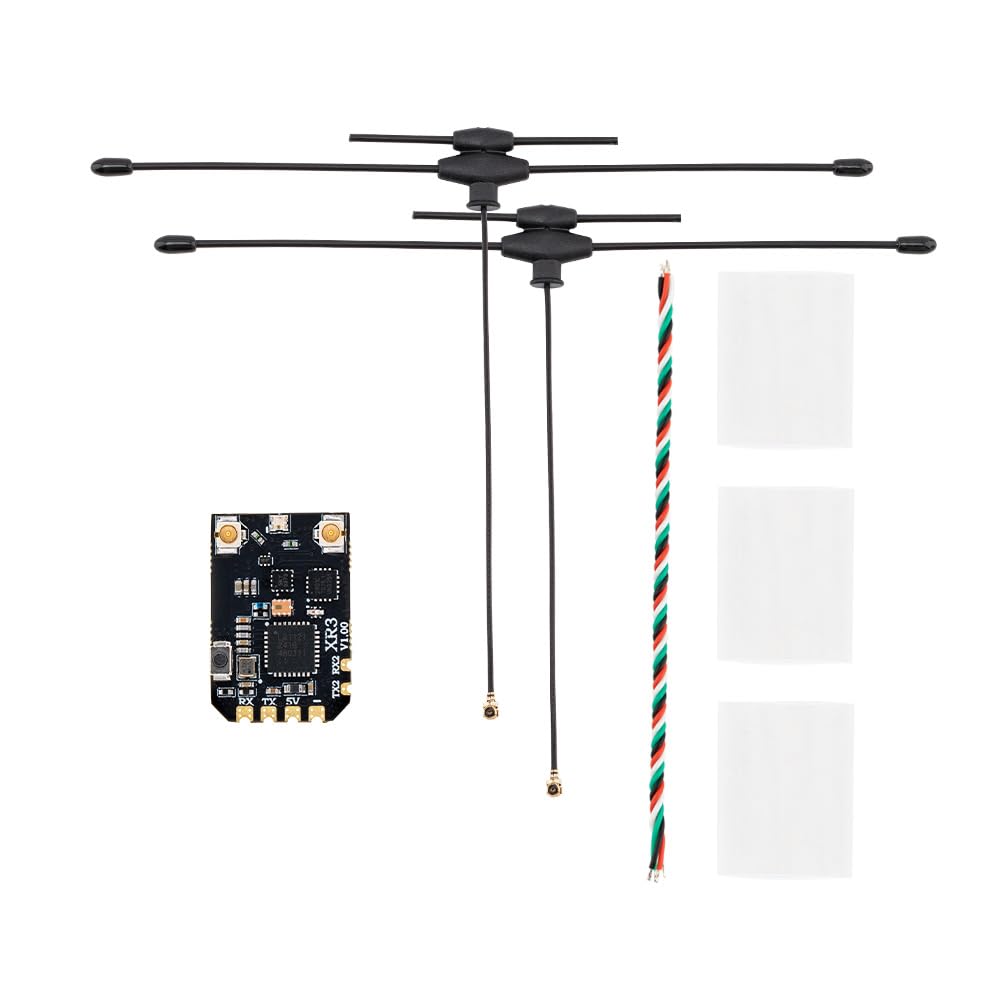
Image 1.1: Radiomaster XR3 Nano Multi-Frequency ExpressLRS Receiver with connected dual-band antennas.
2. Informazzjoni dwar is-Sigurtà
Please refer to this instruction manual before use. Improper handling or installation may lead to equipment damage or personal injury. Ensure all connections are correct and secure before powering on the device. This product is recommended for users aged 18 years and up.
3. Karatteristiċi
- Diversità tal-antenna: Utilizes two antennas for improved signal stability and extended range, featuring a Skyworks RFX2401C for enhanced receiver performance and telemetry.
- Multi-Frequency Support: Operates on both 2.4GHz and Sub-G 900MHz bands.
- MCU ta' Prestazzjoni Għolja: Equipped with an ESP32C3 microcontroller.
- Advanced Transceiver: Features a Semtech LR1121 transceiver.
- Konnettività Addizzjonali: Includes an additional UART port and secondary port for advanced functionality.
- Easy Soldering: Designed with castled pads for convenient soldering.
- Integrated WiFi: Built-in WiFi for effortless configuration and firmware updates via an intuitive WebUI
- Disinn kompatt: Ultra-compact dimensions (22mm x 15mm x 4mm) and lightweight (1.3g without antennas).

Immaġni 3.1: Fuqview of the XR3 receiver highlighting its multi-frequency, antenna diversity, LR1121, and ExpressLRS features.
4. Kontenut tal-Pakkett
Ivverifika li l-oġġetti kollha huma preżenti fil-pakkett tiegħek:
- 1 * XR3 Nano Multi-Frequency Antenna Diversity ExpressLRS Riċevitur
- 2 * T Antenna (Either 2.4GHz, 900Mhz, or Dual-band, depending on selected package)
- 1 * Wajer CRSF
- 3 * Tubu li jinxtorob bis-sħana
- 1 * Karta manwali
5. Setup
5.1 Konnessjoni Fiżika
Connect the XR3 receiver to your flight controller or other compatible device using the provided CRSF wire. Ensure correct polarity and pin assignments for 5V, TX (Transmit), and RX (Receive).
- 5V: Power input (DC 4.5-8.4V)
- TX: Telemetry data output from receiver
- RX: Control data input to receiver
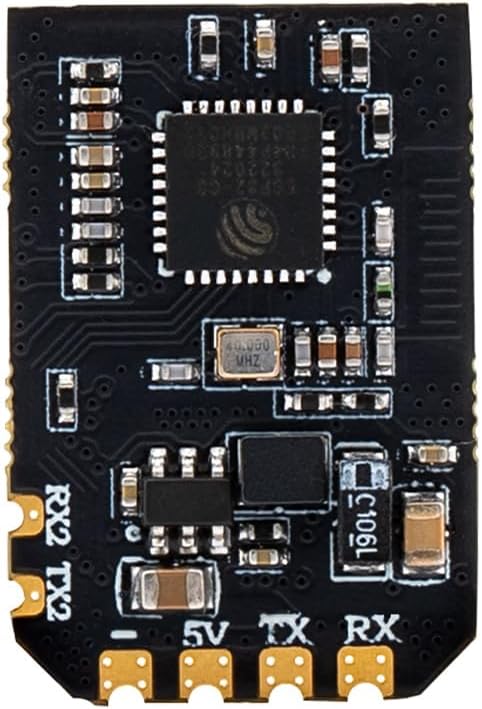
Immaġni 5.1: Mill-qrib view of the XR3 receiver board, indicating the 5V, TX, and RX pads for connection.
5.2 Installazzjoni tal-antenna
Carefully connect the two T-antennas to the IPEX-1 connectors on the receiver board. Ensure they are securely attached. Position the antennas to maximize signal reception, typically at a 90-degree angle to each other for optimal diversity.
5.3 Binding (Pairing)
The XR3 receiver uses the ExpressLRS protocol for binding. Follow these general steps:
- Power on your receiver three times, cycling power quickly. The LED on the receiver should flash rapidly, indicating it is in bind mode.
- On your ExpressLRS compatible transmitter, initiate the binding process. Refer to your transmitter's manual for specific instructions.
- Once bound, the LED on the receiver will turn solid, indicating a successful connection.
Alternatively, the XR3 features a bind button. Press and hold the bind button while powering on the receiver to enter bind mode. The receiver also supports binding via WiFi.

Immaġni 5.2: Minn fuq għal isfel view of the XR3 receiver board, showing the location of the bind button.
5.4 Aġġornamenti tal-Firmware
The XR3 receiver supports firmware updates via its built-in WiFi. Connect to the receiver's WiFi network using a PC or mobile device and access the WebUI to manage settings and update firmware. Ensure you are using the correct firmware target: "RadioMaster XR3 2.4/900 Diversity RX".
6. Joperaw
6.1 Għażla tal-Frekwenza
The XR3 receiver is capable of operating on either 2.4GHz or Sub-G 900MHz frequencies. The type of antenna included with your package determines the primary operating frequency. If you have a dual-band antenna, the receiver can switch between 2.4GHz and 900MHz without requiring an antenna change. Ensure your transmitter is configured to match the receiver's operating frequency.
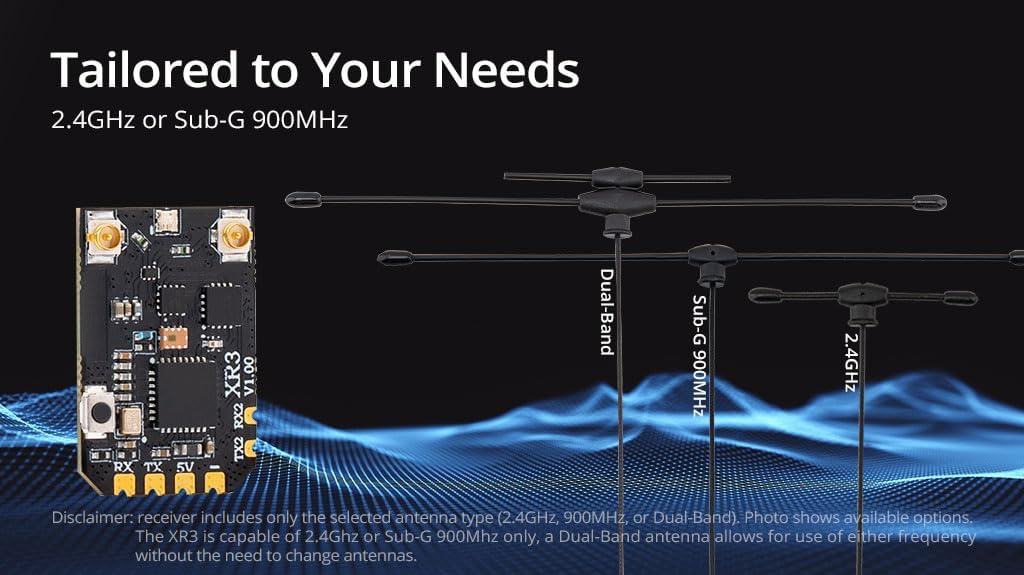
Image 6.1: The XR3 receiver supports various antenna types for 2.4GHz, Sub-G 900MHz, or Dual-Band operation.
6.2 ExpressLRS Functionality
Once bound, the XR3 receiver will communicate with your ExpressLRS transmitter, providing control and telemetry data. The antenna diversity feature automatically selects the best signal from the two antennas, enhancing link quality and range, especially in challenging RF environments. The telemetry power output is 100mW.
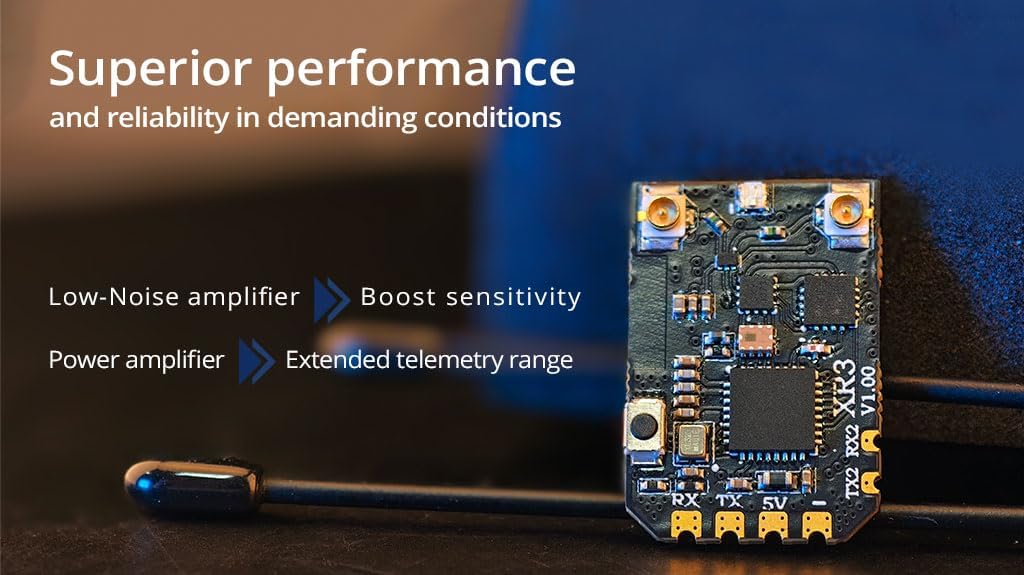
Image 6.2: The XR3 receiver incorporates a Low-Noise amplifier to boost sensitivity and a Power amplifier for extended telemetry range.
7. Manutenzjoni
The XR3 receiver is designed for durability, but proper care can extend its lifespan:
- Żomm ir-riċevitur nadif u ħieles mit-trab, il-ħmieġ u l-umdità.
- Evita li tesponi r-riċevitur għal temperaturi estremi jew dawl tax-xemx dirett għal perjodi twal.
- Ensure antenna connections are secure but do not overtighten.
- Regularly check for any visible damage to the board or antennas.
8 Issolvi l-problemi
If you encounter issues with your XR3 receiver, consider the following:
- No Bind: Ensure the receiver is in bind mode (rapidly flashing LED) and your transmitter is attempting to bind on the correct ExpressLRS firmware version and frequency. Check power connections.
- Poor Signal/Range: Verify antenna connections and positioning. Ensure no obstructions are blocking the signal path. Check for local RF interference. Confirm the correct frequency band (2.4GHz or 900MHz) is selected on both receiver and transmitter.
- No Telemetry: Check the TX/RX wiring between the receiver and flight controller. Ensure CRSF protocol is correctly configured in your flight controller and transmitter.
- Ir-Riċevitur Mhux Mixgħul: Iċċekkja l-provvista tal-enerġija voltage (DC 4.5-8.4V) and polarity. Inspect for any short circuits or damaged components.
9. Speċifikazzjonijiet
| Speċifikazzjoni | Dettall |
|---|---|
| Oġġett | XR3 Nano Multi-Frequency Antenna Diversity ExpressLRS Riċevitur |
| Tip | ISM2.4, FCC915 |
| MCU | ESP32C3 |
| Ċippa RF | LR1121 |
| Konnettur RF | IPEX-1 X 2 |
| Antenna | 2x T-Antenna (2.4GHz, 900Mhz, or Dual-band) |
| Medda ta' Frekwenzi | 2.4GHz / Sub-G 900MHz |
| Qawwa tat-Telemetrija | 100mW |
| Rata Massima ta' Riċeviment ta' Aġġornament | DK500Hz / K1000Hz |
| Minimum Receiver Refresh Rate | 25Hz |
| Ħidma Voltage | DC 4.5-8.4V |
| Piż | 1.3g (mingħajr antenna) |
| Dimensjoni | 22mm * 15mm * 4mm |
| Verżjoni tal-Firmware | ExpressLRS v3.5.1 installat minn qabel |
| Mira tal-FW | RadioMaster XR3 2.4/900 Diversità RX |
| Interface tax-xarabank 1 | CRSF |
| Interface tax-xarabank 2 | UART |
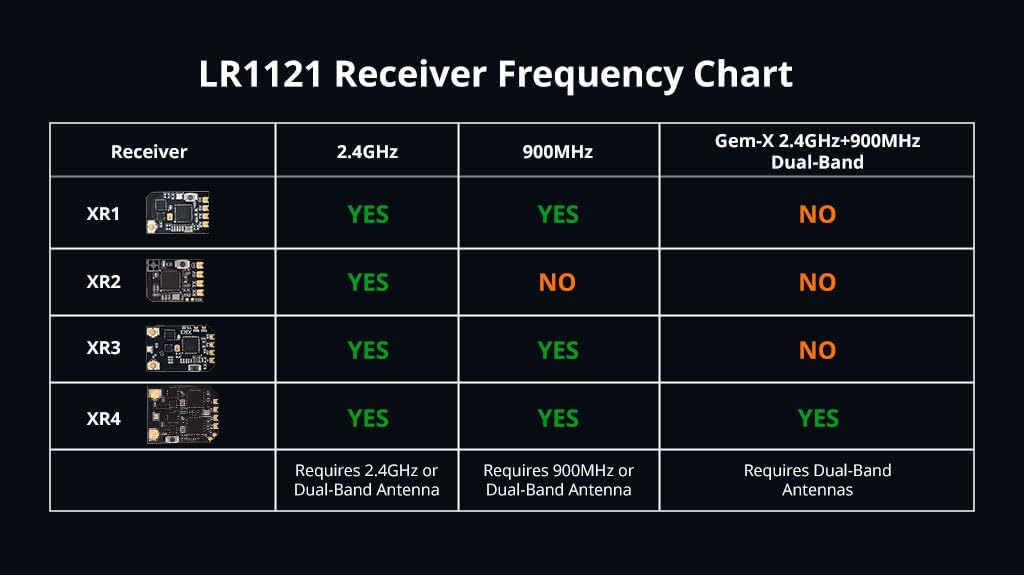
Image 9.1: LR1121 Receiver Frequency Chart, showing compatibility across different XR models.
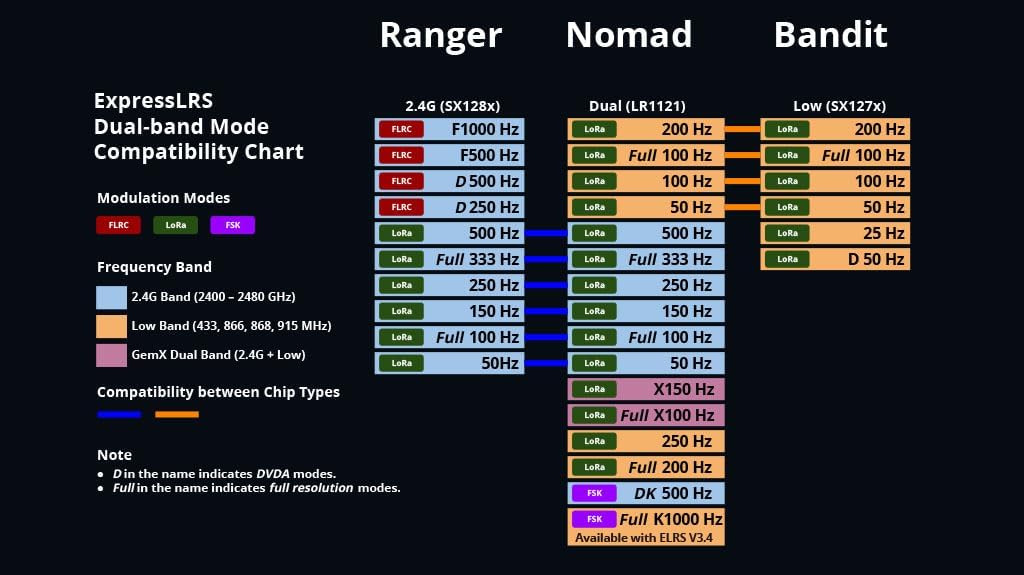
Image 9.2: ExpressLRS Dual-band Mode Compatibility Chart, detailing modulation modes and frequency bands for various modules.
10. Garanzija u Appoġġ
For warranty information and technical support, please refer to the official Radiomaster webis-sit jew ikkuntattja lin-negozjant awtorizzat tiegħek. Żomm il-prova tax-xiri tiegħek għal kwalunkwe talba ta' garanzija.