LEKATO B0DK2R3P8P

LEKATO Mechanical Metronome User Manual

Model: B0DK2R3P8P

Marka: LEKATO

1. Introduzzjoni

The LEKATO Mechanical Metronome is a precision instrument designed to help musicians maintain accurate tempo and rhythm during practice. Featuring a classic pyramid design and durable metal movement, it is suitable for a wide range of instruments and skill levels.

Karatteristiċi ewlenin:

  • Disinn Klassiku: Traditional pyramid shape with an ash wood pattern for an elegant aesthetic.
  • Accurate Timing: Ensures precise tempo with a tolerance of only 0.04%.
  • Durable Metal Movement: High-hardness, precision all-metal mechanism for long-lasting performance without batteries.
  • Versatile Rhythm Patterns: Offers tempo range from 40 to 208 beats per minute (BPM) and rhythm patterns including 2, 3, 4, 6, and 0 (no bell).
  • Ideal for All Skill Levels: A valuable practice tool for beginners and experienced musicians alike.
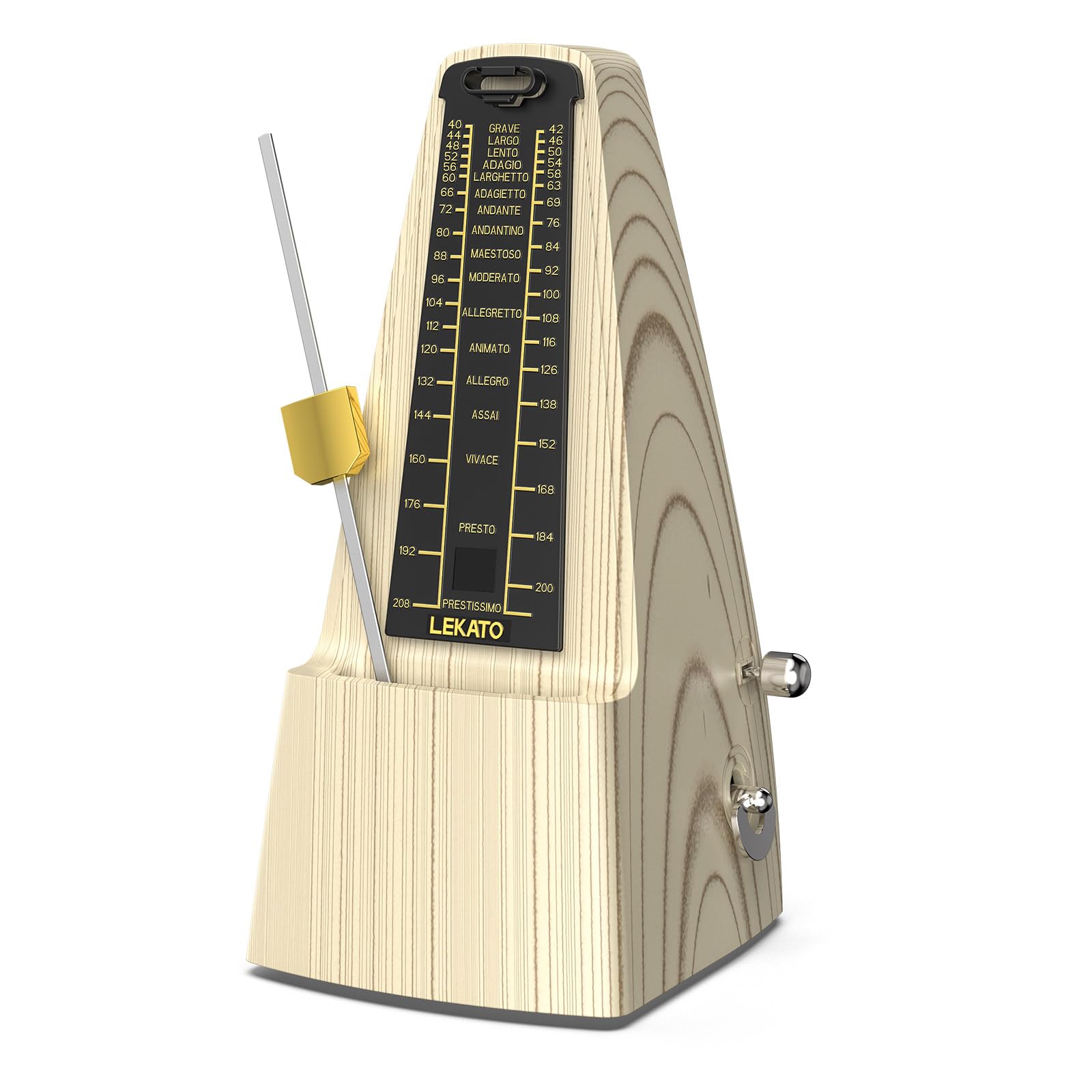
LEKATO Mechanical Metronome, front view.
Figure 1: LEKATO Mechanical Metronome, front view. This image shows the classic pyramid design of the metronome with its pendulum and tempo scale.
Fuqview of LEKATO Mechanical Metronome features: no battery, sturdy spring, metal movement, precision, precise beat, classic style, sufficient sound volume.
Figura 2: Aktarview of LEKATO Mechanical Metronome features, highlighting its battery-free operation, sturdy spring, metal movement, precision, precise beat, classic style, and sufficient sound volume.

2. Twaqqif u l-Ewwel Użu

2.1 Żpakkjar u Spezzjoni Inizjali

Carefully remove the metronome from its packaging. Inspect for any visible damage. Ensure all components, including the dust cover and pendulum, are present.

2.2 Winding the Metronome

The LEKATO Mechanical Metronome is spring-wound and does not require batteries. To wind it, locate the winding key on the side of the unit. Turn the key clockwise until you feel resistance. Do not overwind.

2.3 Adjusting Tempo

The tempo is adjusted by sliding the pendulum weight up or down the pendulum rod. Slide the weight up for a slower tempo (fewer BPM) and down for a faster tempo (more BPM). Align the top edge of the weight with the desired BPM marking on the scale.

2.4 Setting Rhythm Patterns

The metronome features a beat selector to choose different rhythm patterns (e.g., 2/4, 3/4, 4/4, 6/8). This selector is typically a small lever or knob on the side of the metronome. Set it to '0' for no bell accent, or to the desired beat count for an audible accent on the first beat of each measure.

2.5 Bidu u Waqfien

To start the metronome, gently push the pendulum to one side and release it. To stop, gently catch the pendulum and secure it in its resting position, often by sliding the pendulum weight to the top of the rod or engaging a brake mechanism if present.

Step-by-step guide on how to use the metronome: remove cover, rotate clockwork, select beat, adjust pendulum weight, move out pendulum, push pendulum to left and release.
Figure 3: Step-by-step guide on how to prepare and use the metronome, including removing the cover, winding the clockwork, selecting the beat, adjusting the pendulum weight, and starting the pendulum swing.
Ġenb view of LEKATO Mechanical Metronome with dimensions: 25cm/9.8in height, 10cm/3.9in depth, 11.5cm/4.5in width.
Figura 4: Ġenb view of the LEKATO Mechanical Metronome, illustrating its physical dimensions: approximately 25cm (9.8 inches) in height, 10cm (3.9 inches) in depth, and 11.5cm (4.5 inches) in width.
Close-up of the metronome's metal movement, highlighting its durability and precision.
Figura 5: Close-up view of the metronome's internal metal movement, emphasizing its robust construction for durability and precise rhythm generation.
Diagram illustrating the 5 rhythm patterns (2, 3, 4, 6, 0) available on the metronome.
Figure 6: Diagram showing the five selectable rhythm patterns (2, 3, 4, 6, and 0 for no bell) on the metronome, allowing for diverse musical applications.
Labeled diagram of the metronome's components: pendulum hook, pendulum weight, meter plate, beat selector handle, pendulum, clockwork.
Figure 7: Labeled diagram detailing the various parts of the metronome, including the pendulum hook, pendulum weight, meter plate, beat selector handle, pendulum, and internal clockwork mechanism.

3. Istruzzjonijiet Operattivi

3.1 Aġġustament tat-Tempo

To change the tempo, simply slide the brass weight up or down the pendulum rod. The scale on the metronome indicates the beats per minute (BPM). Move the weight up for slower tempos and down for faster tempos. Ensure the top edge of the weight aligns with the desired BPM mark.

3.2 Beat Selection

Use the beat selector switch, usually located on the side of the metronome, to choose your desired beat accent. Options typically include 0 (no accent), 2, 3, 4, and 6 beats. This allows the metronome to produce an audible bell sound on the first beat of each measure, helping you keep track of time signatures.

Dettaljati view of the metronome's dial plate for tempo (Largo 40-60 bpm to Prestissimo 168-208 bpm) and beat selector (0, 2, 3, 4, 6 beats).
Figura 8: Dettaljat view of the metronome's dial plate, showing tempo markings from Largo (40-60 bpm) to Prestissimo (168-208 bpm), and the beat selector for choosing rhythm patterns (0, 2, 3, 4, 6 beats).

3.3 Dimostrazzjoni bil-Vidjo

Video 1: This video demonstrates the general use of a mechanical metronome, including winding, setting tempo, and observing its operation for various instruments like piano and guitar.

4. Manutenzjoni

Proper care ensures the longevity and accuracy of your metronome.

  • Żomm Nadif: Regularly wipe the metronome with a soft, dry cloth to remove dust and fingerprints.
  • Uża l-Għata tat-Trab: Always place the provided dust cover over the metronome when not in use to protect it from dust and accidental damage.
  • Evita Kundizzjonijiet Estremi: Do not expose the metronome to extreme temperatures, humidity, or direct sunlight, as this can affect its internal mechanism and wood finish.
  • Immaniġġja b'Kura: Avoid dropping or subjecting the metronome to strong impacts.
LEKATO Mechanical Metronome with its protective dust cover in place.
Figure 9: The LEKATO Mechanical Metronome shown with its clear protective dust cover, emphasizing the importance of covering the unit when not in use to prevent dust accumulation and damage.

5 Issolvi l-problemi

  • Metronome Not Ticking: Ensure the unit is fully wound. Check that the pendulum is not obstructed and is free to swing.
  • Inaccurate Tempo: Verify that the pendulum weight is correctly aligned with the desired BPM mark on the scale. Ensure the metronome is placed on a flat, stable surface.
  • Bell Not Ringing: Check the beat selector switch to ensure it is set to a number other than '0'. If the issue persists, the internal bell mechanism may require inspection.
  • Ħsejjes mhux tas-soltu: If the metronome produces grinding or unusual noises, stop use immediately and contact customer support. Do not attempt to force any parts.

6. Speċifikazzjonijiet tal-Prodott

KaratteristikaSpeċifikazzjoni
Piż tal-oġġett1.14 liri
Dimensjonijiet tal-Prodott4.72 x 9.46 x 4.33 pulzieri
Isem tal-KulurLight Wood Metal Move
Tip ta' MaterjalMetal Movement
Medda Tempo40-208 BPM
Mudelli tar-Ritmu0, 2, 3, 4, 6

7. Garanzija u Appoġġ

For warranty information, technical support, or any questions regarding your LEKATO Mechanical Metronome, please refer to the contact information provided with your purchase or visit the official LEKATO websit. Żomm l-irċevuta tax-xiri tiegħek bħala prova tax-xiri għal talbiet ta' garanzija.

Dokumenti Relatati - B0DK2R3P8P

Preview Manwal tal-Utent tal-Metronomu LEKATO M65: Karatteristiċi, Tħaddim, u Speċifikazzjonijiet
Manwal komprensiv għall-utent għall-mini metronomu LEKATO M65. Tgħallem dwar il-karatteristiċi tiegħu, kif toperah, l-ispeċifikazzjonijiet, u avviżi importanti. Jinkludi dettalji dwar it-tipi ta' ritmu, is-settings tat-tempo, il-ħsejjes tat-taħbit, u l-ġenerazzjoni tat-toni.
Preview Manwal tas-Sid tas-Sistema tal-Kitarra Wireless LEKATO WS-80
Skopri l-manwal tas-sid tas-Sistema tal-Kitarra Wireless LEKATO WS-80. Tgħallem kif tissettja, tuża, u ssolvi l-problemi ta' dan it-trasmettitur u r-riċevitur wireless ISM ta' 2.4GHz għal kitarri elettriċi, li joffri aktar minn 8 sigħat ta' ħajja tal-batterija u plagg li jdur 220 grad. Ottimizza s-setup tal-kitarra tiegħek b'din is-soluzzjoni wireless affidabbli u portabbli.
Preview LEKATO PA-1 Guitar Headphone AmpManwal aktar ħaj
User manual for the LEKATO PA-1 Electric Guitar Headphone Amplifier with Bluetooth. Includes setup, operation, and troubleshooting information.
Preview Gwida għall-Aġġornament tal-Firmware tas-Serje LEKATO Guitar Looper
Istruzzjonijiet għall-aġġornament tal-firmware fuq il-LEKATO Guitar Looper Series tiegħek biex issolvi l-problemi tal-ħoss tat-tikk. Jinkludi passi biex tniżżel l-app CubeSuite u twettaq l-aġġornament OTA.
Preview Looper Pro Guitar Effector User Manual - LEKATO
Comprehensive user manual for the LEKATO Looper Pro Guitar Effector. Learn about its 48K/24bit audio quality, 40-minute recording capacity, 9 loops, built-in tuner, USB connectivity for WAV file import/export, and detailed operation instructions. Ideal for guitarists seeking professional looping capabilities.
Preview Manwal tas-Sid tal-Proċessur tal-Effett tal-Kitarra LEKATO TANK-G
Manwal komprensiv għas-sid għall-LEKATO TANK-G Guitar Effect Processor, li jiddeskrivi l-karatteristiċi, il-funzjonijiet u t-tħaddim tiegħu. Jinkludi informazzjoni dwar presets, modalità live, moduli tal-effetti, parametri tekniċi u downloads tas-softwer.