
1. Introduzzjoni
The UMEIJA OBD2 Scanner with Battery Tester (Model OBD-V620-04) is a comprehensive diagnostic tool designed for vehicles compliant with OBD II protocols. This device allows users to quickly read and clear engine error codes, view live data streams, perform battery tests, and conduct O2/EVAP diagnostics. It is an essential tool for understanding vehicle health and performing maintenance.
2. Prodott Aktarview
The UMEIJA OBD2 Scanner is a compact and durable device featuring an upgraded microprocessor for fast and accurate results. Its user-friendly interface and plug-and-play design make it accessible for both mechanics and DIY enthusiasts.
Karatteristiċi ewlenin:
- Multi-Function Diagnostics: Reads and clears engine error codes, displays live data streams with graphic displays, views freeze frame data, and checks MIL readiness status.
- Kompatibilità Wiesgħa tal-Vettura: Supports all OBDII protocols (KWP2000, J1850 VPW, ISO9141, J1850 PWM, CAN) for most US (1996+), EU, and Asian (2000+) cars, SUVs, and light trucks.
- Durable & Compact Design: Weighs 9.9 ounces, measures 8.9 x 6.9 x 1.4 inches, and includes a 2.5-foot heavy-duty cable with a standard 16-pin OBD connector.
- Fast & Accurate Results: Upgraded microprocessor ensures real-time vehicle diagnostics.
- Karatteristiċi Avvanzati: Integrated battery tester for monitoring battery life and voltage, plus O2 sensor and EVAP system diagnostics.
- Appoġġ Multi-Lingwi: Supports English, German, French, Spanish, Finnish, Dutch, Russian, and Portuguese.

Figure 1: UMEIJA OBD2 Scanner displaying various diagnostic functions including Voltage, Read DTC, O2 Sensor, Clear DTC, EVAP, Vehicle Info, I/M, OBD/EOBD, RT Curve, Freeze, Live Data, and DTC Lib.
3. Setup
- Sib il-Port tal-OBD2: The OBD2 port is typically located under the dashboard on the driver's side of the vehicle. Refer to your vehicle's owner's manual for the exact location.
- Qabbad l-Iskaner: Plug the 16-pin OBD connector from the scanner into your vehicle's OBD2 port. Ensure a secure connection.
- Qawwa Mixgħul: The scanner will automatically power on once connected to the vehicle's OBD2 port. If it does not, ensure your vehicle's ignition is in the 'ON' position (engine off).
Figure 2: UMEIJA OBD2 Scanner connected to a car's OBD2 port, showing the easy setup process.
4. Istruzzjonijiet Operattivi
The scanner features intuitive buttons for easy navigation. Use the directional arrows to move through menus and 'OK' to confirm selections. 'ESC' is used to go back.
Navigazzjoni Bażika:
- Buttuni tal-Vleġeġ: Navigate up, down, left, or right through menu options.
- Buttuna OK: Confirm a selection or enter a sub-menu.
- Buttuna ESC: Exit the current screen or return to the previous menu.
- Buttuna DTC: Directly access Diagnostic Trouble Code functions.
- Buttuna BAT: Directly access Battery Test functions.
5. Funzjonijiet Dijanjostiċi
5.1. Reading and Clearing DTCs (Diagnostic Trouble Codes)
- From the main menu, select 'OBD/EOBD' or press the 'DTC' button.
- Choose 'Read DTC' to view current, pending, or permanent trouble codes. The scanner will display the code and its definition.
- To clear codes, select 'Clear DTC'. Confirm your choice when prompted. This will turn off the Check Engine Light.
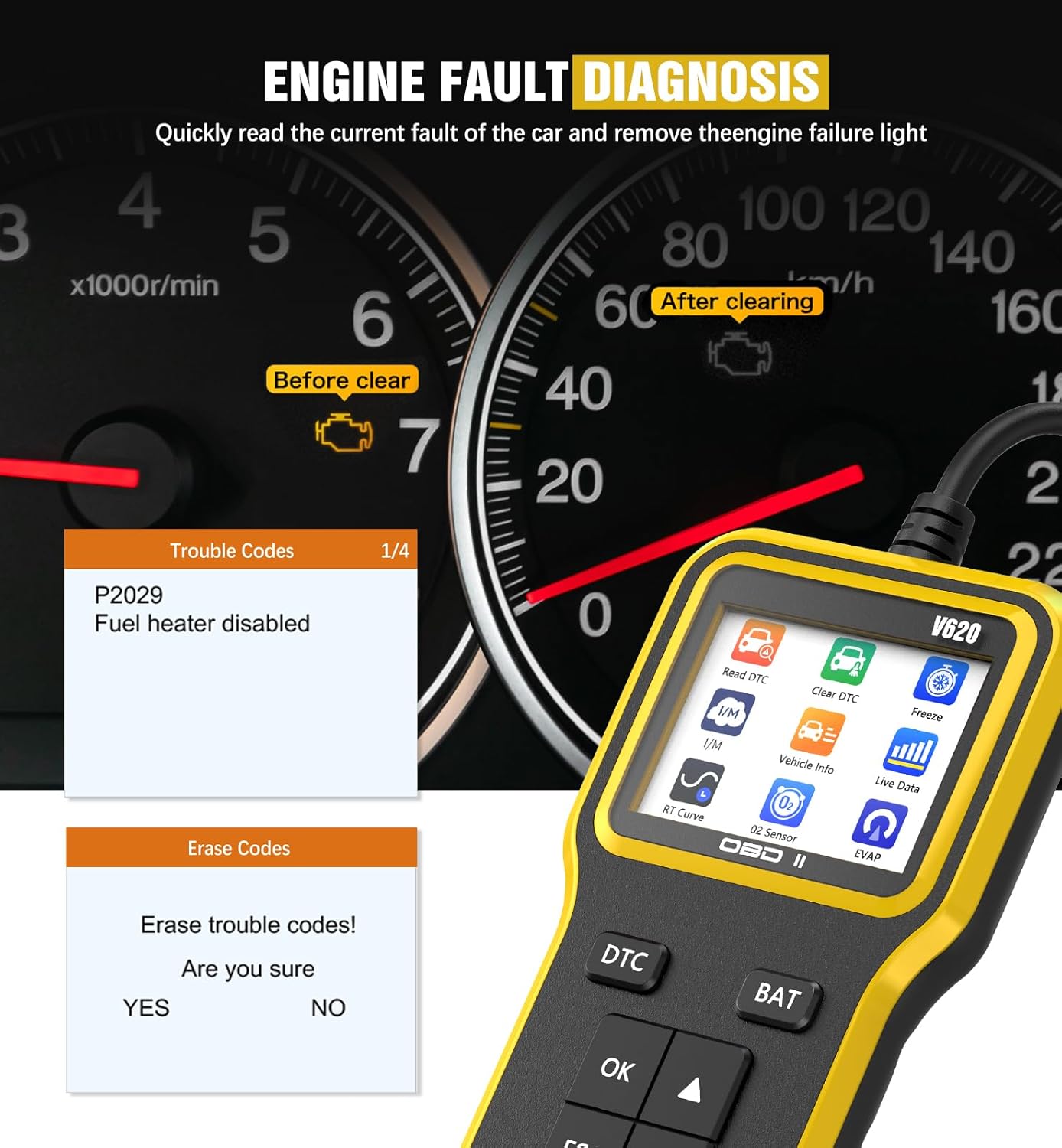
Figure 3: UMEIJA OBD2 Scanner displaying engine fault codes (e.g., P02029) and the option to erase them, indicating a successful diagnosis and clearing process.
5.2. Fluss ta' Dejta Diretta
- From the main menu, select 'Live Data' or navigate to the 'Data Stream' option.
- The scanner will display real-time sensor data from your vehicle, such as RPM, speed, coolant temperature, and more.
- Use the arrow buttons to scroll through different data parameters.

Figure 4: UMEIJA OBD2 Scanner displaying multiple real-time data streams, including FUEL SYS, LOAD_PCT, ECT, SHRFT, LONGFT, FRP, MAP, RPM, SPEED, and SPARKADV, providing a comprehensive view of vehicle performance.
5.3. Test tal-Batterija
- From the main menu, select 'Battery' or press the 'BAT' button.
- L-iskaner se juri l-volum attwali tal-batterijatage, helping you assess the battery's health.
5.4. O2 Sensor and EVAP System Diagnostics
- Navigate to the 'O2 Sensor' or 'EVAP' options from the main menu.
- These functions allow for advanced diagnostics related to oxygen concentration, fuel injection control, and evaporative emission systems, contributing to improved fuel efficiency and reduced emissions.
6 Issolvi l-problemi
- L-iskaner ma jixgħelx:
- Verify the OBD2 connector is securely plugged into the vehicle's port.
- Ensure the vehicle's ignition is in the 'ON' position (engine off).
- Iċċekkja l-volum tal-batterija tal-vetturatage using the scanner's battery test function. A low battery might prevent the scanner from powering on.
-
Ask a question about this manual
Ask about setup, troubleshooting, compatibility, parts, safety, or missing instructions. Manuals+ will review the question and use this page’s manual context to help answer it.