
1. Introduzzjoni
This manual provides comprehensive instructions for the installation, operation, and maintenance of your NEO Zigbee Contact Sensor (Model NAS-DS09). This device is designed to enhance your home security and automation by detecting the open or closed status of doors and windows.
2. Prodott Aktarview
2.1. Komponenti
- Unità tas-Sensor Prinċipali
- Auxiliary Unit (Magnet)
- AA Battery (1.5V)
- Pads li jwaħħlu
- Manwal ta' Istruzzjoni

Figure 2.1: What's in the box. Includes the main sensor unit, auxiliary magnet, AA battery, and instruction manual.
2.2. Karatteristiċi ewlenin
- Precise Detection: Maximum effective gap of 20mm between main and auxiliary units for accurate open/close status monitoring.
- Ħajja twila tal-batterija: Powered by a single AA battery for extended operation.
- Manual Disable: Features an ON/OFF switch for convenient power management and energy saving.
- Integrazzjoni tad-Dar Intelliġenti: Compatible with Zigbee hubs and platforms such as SmartThings, Home Assistant, Alexa, and Google Assistant.
- Twissijiet f'ħin reali: Receive instant notifications on your smart device when a door or window status changes.
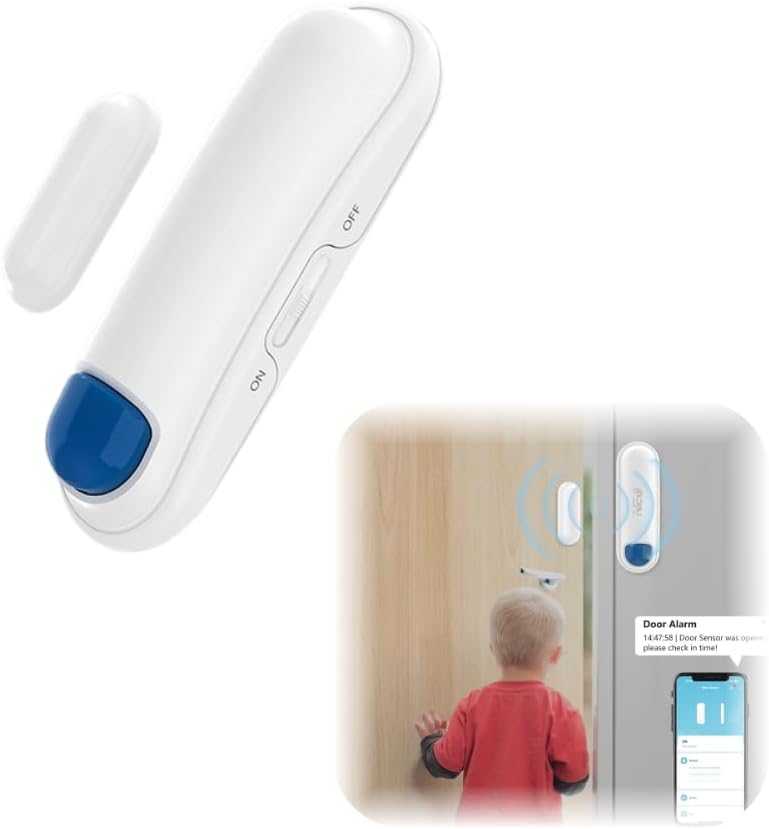
Figure 2.2: The NEO Zigbee Contact Sensor (main unit and auxiliary magnet) and an illustration of its use for door monitoring.
3. Setup u Installazzjoni
3.1. Prerekwiżiti
- A compatible Zigbee hub (e.g., SmartThings, Home Assistant).
- A smartphone or tablet with the appropriate smart home application installed.
3.2. Installazzjoni tal-batterija
- Gently open the main sensor unit casing.
- Insert one AA LR6 1.5V battery, ensuring correct polarity (+/-).
- Agħlaq il-ċasing b'mod sigur.

Figure 3.1: The main sensor unit showing the ON/OFF switch and the AA battery power supply.
3.3. Immuntar tas-Sensor
- Identify a clean, dry, and flat surface on your door/window frame (for the main unit) and the moving part of the door/window (for the auxiliary unit).
- Clean both surfaces thoroughly to ensure optimal adhesion.
- Attach the main sensor unit to the fixed frame using the provided adhesive pad.
- Attach the auxiliary unit (magnet) to the moving part of the door or window, aligning it with the main sensor unit.
- Ensure the gap between the main unit and the auxiliary unit is no more than 20mm when the door/window is closed.

Figure 3.2: Proper installation of the Zigbee Contact Sensor on a door, with the main unit on the frame and the magnet on the door.

Figure 3.3: Illustration of the sensor detecting open and closed states, highlighting the maximum effective distance.
4. Istruzzjonijiet ta 'Tqabbil
To integrate your NEO Zigbee Contact Sensor into your smart home system, follow these pairing steps:
- Ensure your Zigbee hub is powered on and connected to your home network.
- Open your smart home application (e.g., SmartThings, Home Assistant) and put your Zigbee hub into pairing or discovery mode. Refer to your hub's specific instructions for this process.
- With the sensor powered on (ON switch position), activate the sensor's pairing mode. This typically involves a specific button press or sequence on the sensor itself. Consult the small instruction leaflet included with your sensor for the exact method.
- Once the sensor is in pairing mode, your Zigbee hub should detect it. Follow the prompts in your smart home application to complete the pairing process.
- After successful pairing, the sensor will appear in your smart home application, and you can assign it to a room or create automation rules.
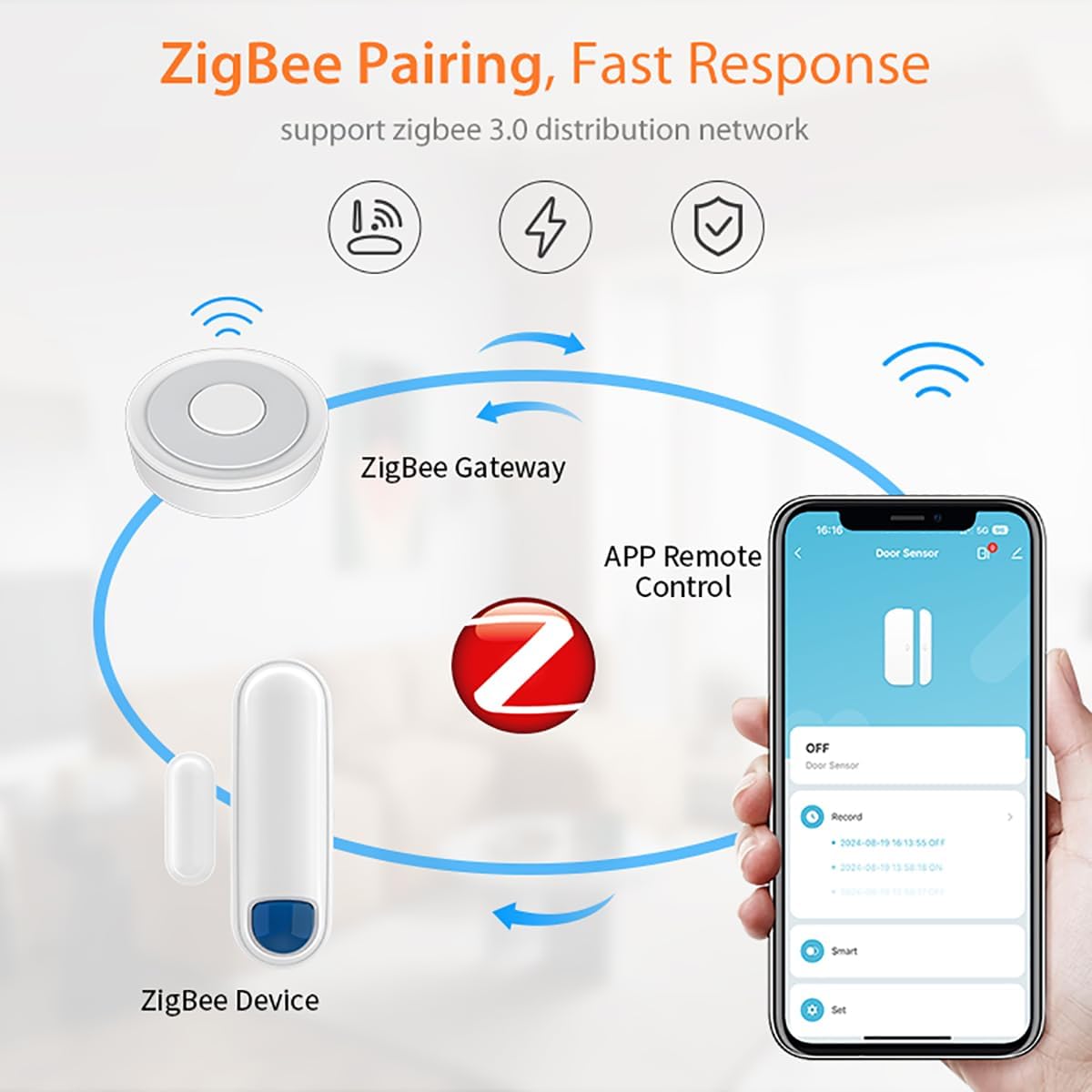
Figure 4.1: Diagram illustrating the Zigbee pairing process between the sensor, a Zigbee gateway, and remote control via a smartphone application.

Figure 4.2: Visual representation of adding the sensor to a Zigbee network, showing the router, gateway, and sensor connection.
5. Operazzjoni
5.1. Monitoraġġ tal-Istatus
Once paired, the sensor will continuously monitor the open/close status of the door or window it is installed on. This status is reported to your Zigbee hub and displayed in your smart home application.

Figure 5.1: Remote control of the sensor via a smartphone application, allowing monitoring from anywhere.
5.2. Real-time Alerts and Notifications
Configure your smart home application to receive instant alerts and notifications on your smartphone or tablet whenever the sensor detects a change in status (e.g., a door opening). This feature is crucial for security monitoring.

Figure 5.2: A smartphone displaying a real-time notification indicating a door or window has been opened.
5.3. Automation and Voice Control
Leverage the sensor's compatibility with platforms like SmartThings, Home Assistant, Alexa, and Google Assistant to create automation routines. For example:
- Turn on lights when a door opens (requires a smart plug or smart lighting).
- Receive voice announcements when a window is opened.
- Integrate with other security devices.

Figura 5.3: Eżample of a linkage alarm system where a door sensor triggers a smart power plug via a gateway to turn on a light.
5.4. Manual Disable Feature
The sensor includes an ON/OFF switch. Set the switch to "OFF" to temporarily disable the sensor, which can be useful during maintenance or when you do not require active monitoring, helping to conserve battery life.
6. Manutenzjoni
6.1. Sostituzzjoni tal-batterija
When the battery level is low, your smart home application may notify you. To replace the battery:
- Set the sensor's ON/OFF switch to "OFF".
- Gently open the main sensor unit casing.
- Remove the old AA LR6 1.5V battery.
- Insert a new AA LR6 1.5V battery, ensuring correct polarity.
- Agħlaq il-ċasing b'mod sigur.
- Set the ON/OFF switch back to "ON".
Armi l-batteriji qodma skont ir-regolamenti lokali.
7 Issolvi l-problemi
- Is-senser mhux qed jingħaqad mal-hub:
- Ensure the Zigbee hub is in pairing mode.
- Verify the sensor has a fresh battery and is powered ON.
- Bring the sensor closer to the Zigbee hub during the pairing process.
- Try resetting the sensor (refer to the small instruction leaflet for reset procedure).
- Inaccurate open/close detection:
- Check the alignment of the main unit and auxiliary magnet. They should be parallel.
- Measure the gap between the two units when closed. It must be within the 20mm effective distance.
- Ensure the mounting surfaces are stable and not allowing movement that affects alignment.
- Ħajja qasira tal-batterija:
- Ensure the sensor's ON/OFF switch is set to "OFF" when not in use for extended periods.
- Verify the battery type is AA LR6 1.5V and is new.
- Temperaturi estremi jistgħu jaffettwaw il-prestazzjoni tal-batterija.
- No alerts or notifications:
- Check your smart home application's notification settings for the sensor.
- Ensure your smartphone/tablet has notifications enabled for the smart home app.
- Verify the sensor is still paired and reporting status correctly in the app.
8. Speċifikazzjonijiet
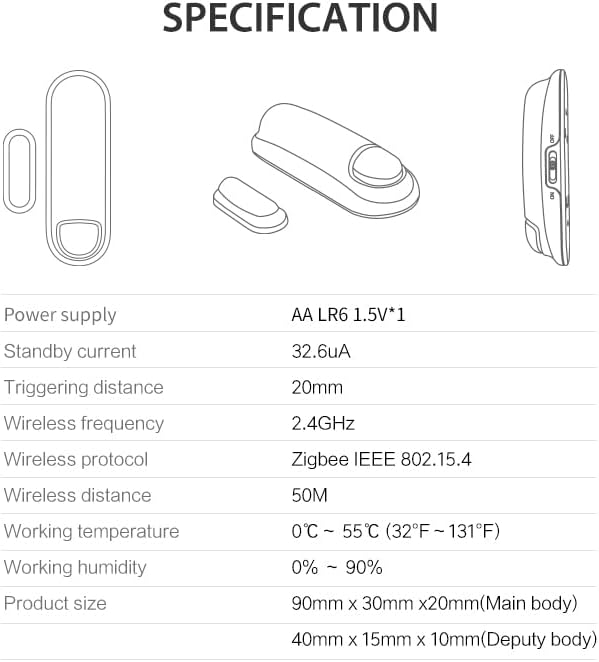
Figure 8.1: Technical specifications of the NEO Zigbee Contact Sensor.
| Provvista tal-Enerġija | AA LR6 1.5V * 1 |
| Kurrent Standby | 32.6uA |
| Distanza ta' Attivazzjoni | 20mm |
| Frekwenza bla fili | 2.4GHz |
| Protokoll bla fili | Zigbee IEEE 802.15.4 |
| Distanza bla fili | 50M |
| Temperatura tax-Xogħol | 0°C ~ 55°C (32°F ~ 131°F) |
| Umdità tax-Xogħol | 0% ~ 90% |
| Dimensjonijiet tal-Korp Prinċipali | 90mm x 30mm x 20mm |
| Auxiliary Body Dimensions | 40mm x 15mm x 10mm |
| Apparati Kompatibbli | Home Assistant, SmartThings, Alexa, Google Assistant |
9. Garanzija u Appoġġ
For warranty information and customer support, please refer to the documentation provided at the point of purchase or visit the official NEO websit. Żomm l-irċevuta tax-xiri tiegħek għal pretensjonijiet ta' garanzija.