
1. Introduzzjoni
This manual provides essential information for the safe and efficient operation, maintenance, and troubleshooting of your APOLLO Counterbalanced Electric Stacker Forklift, Model CPD15W-177. Please read this manual thoroughly before operating the equipment to ensure proper usage and to prevent injury or damage.

Figure 1: APOLLO Counterbalanced Electric Stacker Forklift.
2. Istruzzjonijiet tas-Sigurtà
Always prioritize safety when operating the electric stacker. Failure to follow these instructions can result in serious injury or death.
- Taħriġ għall-Operaturi: Persunal imħarreġ u awtorizzat biss għandu jħaddem dan it-tagħmir.
- Iċċekkja ta' qabel l-Operazzjoni: Before each use, inspect the stacker for any damage, loose parts, or malfunctions. Ensure all controls are functioning correctly.
- Kapaċità tat-Tagħbija: Never exceed the rated load capacity of 3300 lbs. Refer to the load capacity charts for safe lifting limits at various heights and load centers.
- Stable Loads: Ensure loads are stable and properly centered on the forks before lifting or moving.
- Clearance: Maintain adequate clearance from walls, obstacles, and personnel during operation.
- Waqfien ta' Emerġenza: Familiarize yourself with the emergency stop button and its location.
- Sigurtà tal-batterija: Follow all battery charging and maintenance procedures outlined in this manual. Wear appropriate personal protective equipment (PPE) when handling batteries.
- Żona tax-Xogħol: Operate the stacker on level, firm surfaces. Avoid uneven terrain or slopes.

Figure 2: Warning labels on the mast, indicating safety precautions for operation.
3. Setup u Assemblea
The APOLLO Counterbalanced Electric Stacker is typically delivered largely pre-assembled. However, some initial setup and checks are required before first use.
3.1 Spezzjoni Inizjali
Upon receipt, carefully inspect the packaging and the stacker for any signs of shipping damage. Report any damage immediately to the carrier and supplier.
3.2 Konnessjoni tal-Batterija u l-Iċċarġjar Inizjali
Ensure the battery is properly connected and fully charged before the first operation. Refer to the charging section for detailed instructions.

Figure 3: The battery compartment, showing the lead-acid batteries. Ensure connections are secure.
3.3 Fork Adjustment
The forks are adjustable to accommodate various pallet sizes. Adjust the fork width by loosening the locking pins, sliding the forks to the desired position, and re-securing the pins.

Figure 4: Fork dimensions and adjustability. Forks are 42 inches long, 1.4 inches thick, and adjustable from 8.7 to 26.8 inches in width.
4. Istruzzjonijiet Operattivi
4.1 Kontrolli Fuqview
The stacker features a long handle structure for flexible steering and a control panel for key functions.
- Swiċċ taċ-ċavetta: Turns the stacker on/off.
- Buttuna ta' Waqfien ta' Emerġenza: Immediately cuts power to all functions.
- Lift/Lower Controls: Levers or buttons on the handle to raise and lower the forks.
- Kontrolli Direzzjonali: Twist grip or buttons on the handle for forward and reverse movement.
- Indikatur tal-batterija: Juri l-livell attwali tal-ċarġ tal-batterija.

Figure 5: The control panel, featuring the key switch, emergency stop button, and battery charge indicator.
4.2 Starting the Stacker
- Insert the key into the key switch and turn it to the 'ON' position.
- Check the battery indicator to ensure sufficient charge.
- Kun żgur li l-buttuna tal-waqfien ta' emerġenza hija diżattivata (miġbuda 'l barra).
4.3 Irfigħ u Tnaqqis ta' Tagħbijiet
- Position the stacker squarely in front of the load.
- Carefully insert the forks completely under the pallet or load.
- Use the lift control to raise the load slightly off the ground.
- Before moving, ensure the load is stable and within the stacker's capacity.
- To lower, use the lower control. Lower loads slowly and smoothly.
4.4 Moving the Stacker
- With the load slightly raised, use the directional controls on the handle to move forward or backward.
- Steer using the long handle. The vertical driving wheel provides efficient and flexible movement.
- Always travel with the load in the lowest possible position for stability, especially when turning.
4.5 Load Capacity Charts
Adhere strictly to the load capacity guidelines to prevent tipping or damage.

Figure 6: Load Capacity Chart. For example, load capacity is 1980 lbs when lifting height is between 157-177 inches, and 3300 lbs when lifting height is within 118 inches.

Figure 7: Load center chart, illustrating how load capacity decreases as the load center distance increases.
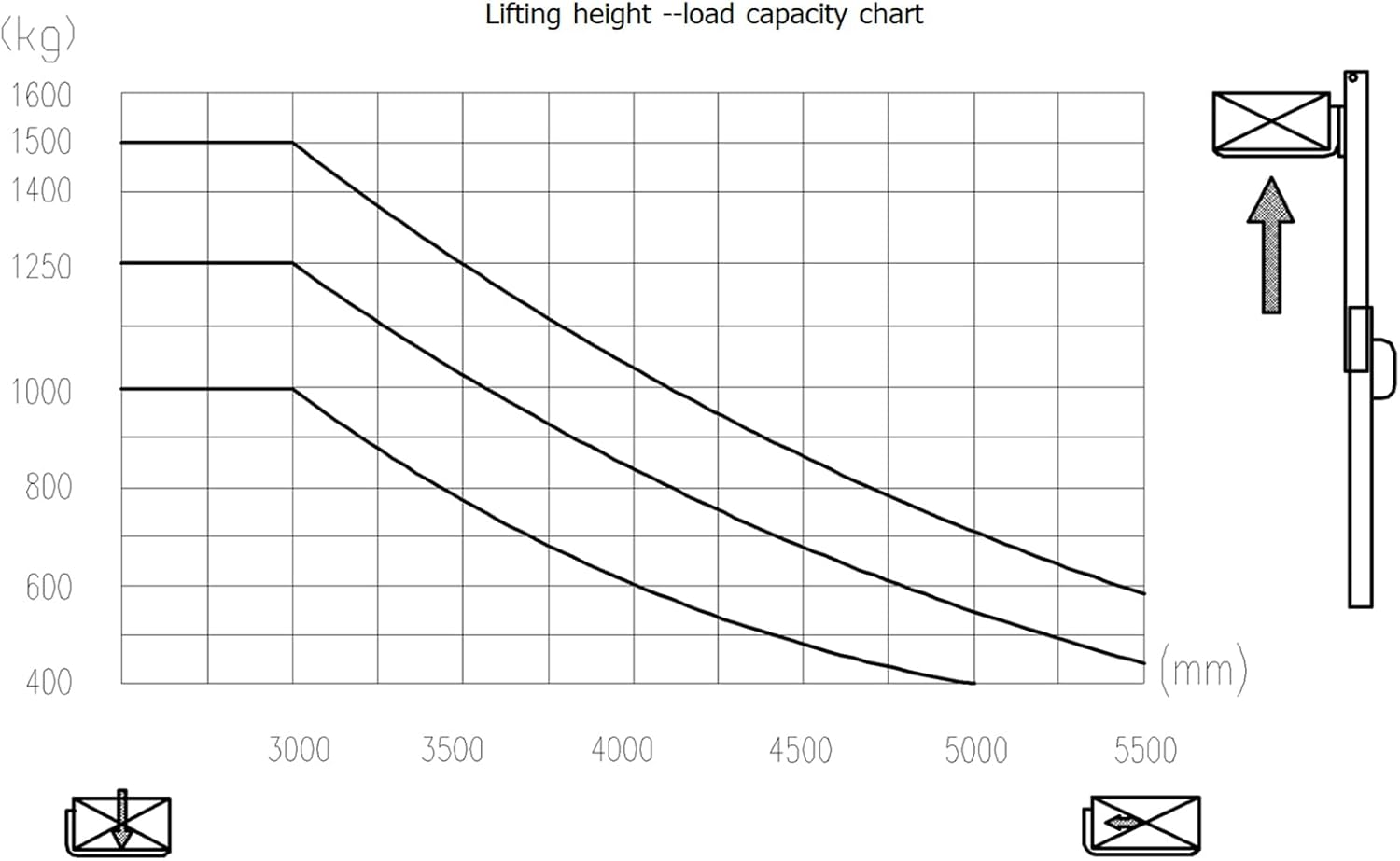
Figure 8: Lifting height versus load capacity chart, showing maximum weight at different lift heights.
5. Manutenzjoni
Regular maintenance is crucial for the longevity and safe operation of your electric stacker.
5.1 Verifiki ta' Kuljum
- Iċċekkja l-livell ta 'ċarġ tal-batterija.
- Inspect forks for damage or wear.
- Ivverifika l-funzjonalità tal-brejk.
- Check for hydraulic fluid leaks.
- Ensure all warning labels are legible.
5.2 Iċċarġjar tal-batterija
Charge the lead-acid battery using the designated charger. Connect the charger to the charging port on the stacker. Ensure proper ventilation during charging.

Figure 9: The charger port, clearly marked for battery charging.
5.3 Sistema Idrawlika
Periodically check the hydraulic fluid level and replenish if necessary. Use only recommended hydraulic fluid. Inspect hydraulic hoses and fittings for wear or damage.
5.4 Wheel and Caster Inspection
Inspect wheels and casters for wear, damage, or debris. Replace worn wheels to maintain smooth operation and stability.
6 Issolvi l-problemi
This section addresses common issues you might encounter with your electric stacker.
| Problema | Kawża Possibbli | Soluzzjoni |
|---|---|---|
| Stacker does not power on | Emergency stop engaged; Battery discharged; Key switch off; Loose battery connection | Disengage emergency stop; Charge battery; Turn key switch on; Check battery terminals |
| Forks do not lift | Overload; Low hydraulic fluid; Hydraulic system fault; Lift motor issue | Reduce load; Check/refill hydraulic fluid; Contact service technician |
| Stacker moves slowly or not at all | Low battery charge; Drive motor fault; Obstruction in wheels | Charge battery; Inspect drive wheel; Clear obstructions |
| Ħsejjes mhux tas-soltu waqt it-tħaddim | Loose components; Worn bearings; Motor issue | Inspect for loose parts; Contact service technician |
7. Speċifikazzjonijiet
Detailed technical specifications for the APOLLO Counterbalanced Electric Stacker Forklift, Model CPD15W-177.

Figure 10: Key dimensions of the stacker, including mast height lowered (82.1 inches), mast height raised (216.5 inches), overall length (109.4 inches), and maximum lift height (177 inches).
| Karatteristika | Speċifikazzjoni |
|---|---|
| Numru tal-Mudell | CPD15W-177 |
| Kapaċità tat-Tagħbija | 3300 lbs |
| Max. Għoli ta 'rfigħ | 177 pulzieri |
| Height, Mast Lowered | 82 pulzieri |
| Height, Mast Extended | 216.5 pulzieri |
| Fork Dimensions (L x W x T) | 42 x 3.9 x 1.3 pulzieri |
| Adjustable Fork Width | 8.7 - 26.8 pulzieri |
| Lifting Speed (Laden/Unladen) | 0-4.7 / 0-6.3 inch/s |
| Veloċità tal-Ivvjaġġar (Mgħobbija/Mhux Mgħobbija) | 63.4 / 65.6 inch/s |
| Gradeability (Laden/Unladen) | 6% / 10% |
| Raġġ tat-tidwir | 61.8 pulzieri |
| Tip ta 'batterija | Aċidu taċ-Ċomb |
| Vol ikklassifikattage / Kapaċità | 24V / 280Ah |
| Piż tas-Servizz | 4585 lbs |
| Materjal | Azzar Liga |
Nota: L-ispeċifikazzjonijiet jistgħu jinbidlu mingħajr avviż għat-titjib tal-prodott.
8. Garanzija u Appoġġ
APOLLO products are engineered for durability and performance. For warranty information, service requests, or technical support, please refer to the contact details provided at the time of purchase or visit the official APOLLO websit.
Appoġġ għall-Klijent: For assistance, please contact APOLLOLIFT customer support. Details can be found on your purchase documentation or the APOLLO brand store.
Ritorni: This product is eligible for 30-day easy returns. Please refer to the seller's return policy for specific conditions.