
1. Introduzzjoni
This manual provides detailed instructions for the installation, configuration, operation, and maintenance of the TP-Link CPE610 5GHz 300Mbps 23dBi Outdoor CPE/Access Point. The CPE610 is designed for outdoor wireless networking applications, offering excellent beam directivity, improved latency, and noise immunity with its high-gain directional 2x2 MIMO cassegrain antenna and dedicated metal reflector.
Proper setup, grounding, and cable shielding are essential for protection against lightning and electrostatic discharge. Consult an IT professional for assistance if needed.
2. Kontenut tal-Pakkett
Iċċekkja li l-oġġetti kollha elenkati hawn taħt huma inklużi fil-pakkett tiegħek. Jekk xi oġġett ikun nieqes jew bil-ħsara, ikkuntattja lill-bejjiegħ tiegħek.
- TP-Link CPE610 Outdoor CPE Unit
- 24V 0.5A Passive PoE Adapter
- Kurdun tal-Enerġija AC
- Ċineg tal-Immuntar tal-Arblu
- Gwida għall-Installazzjoni
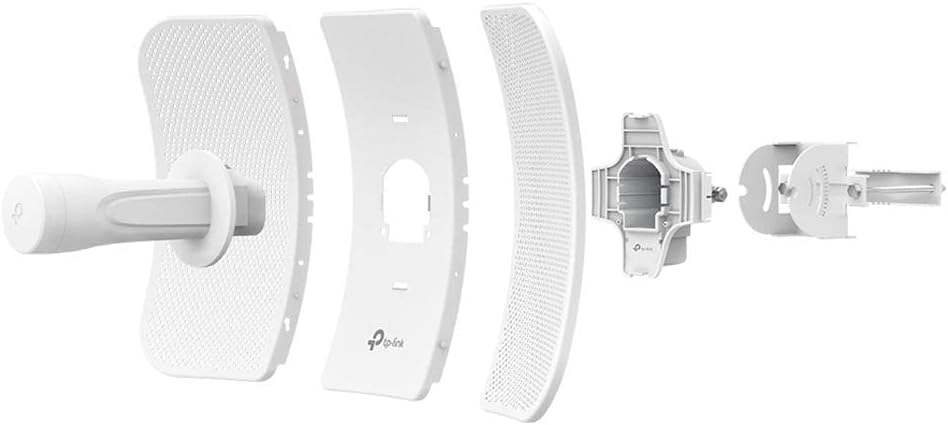
This image displays the individual components of the TP-Link CPE610, including the main antenna unit, the reflector panels, and the mounting bracket with its associated hardware.
3. Setup u Installazzjoni
Follow these steps for proper installation and initial setup of your CPE610.
3.1 Installazzjoni tal-Ħardwer
- Assemble the CPE Unit: Attach the reflector panels to the main CPE unit. Ensure all parts are securely fastened.
- Immuntar: Use the provided pole mounting straps to secure the CPE610 to a pole or mast. Ensure the device is positioned for clear line-of-sight to the target area.
- Connect PoE Adapter: Connect an Ethernet cable from the CPE610's Ethernet port to the "PoE" port on the 24V 0.5A Passive PoE Adapter.
- Qabbad man-Netwerk: Connect another Ethernet cable from the "LAN" port on the PoE Adapter to your computer or network switch/router.
- Qawwa Mixgħul: Connect the AC power cord to the PoE Adapter and then to a power outlet. The device will power on.

This image shows the TP-Link CPE610 with its adjustable mounting bracket, illustrating how it attaches to a pole for outdoor deployment.
3.2 Initial Configuration (PharOS Web interface)
The CPE610 is managed via the PharOS web interface.
- Ipprepara l-Kompjuter tiegħek: Before connecting, set your computer's IP address manually to
192.168.0.10b'maskra ta 'subnet ta'255.255.255.0. - Access PharOS: Iftaħ a web browser u naviga għal
http://192.168.0.254. - Idħol: The default username and password are
admin. You will be prompted to change the password upon first login. - Setup ta' malajr: Use the Quick Setup wizard to configure the device.
- Select the desired operating mode (e.g., Access Point, Client, Repeater, Bridge).
- Configure wireless settings such as SSID, security type (WPA2-PSK recommended), and password.
- Adjust network settings, including IP address, subnet mask, and gateway, to match your network infrastructure.
- Ħlief Settings: Apply and save all configurations.
- Restore Computer IP: Change your computer's IP address back to DHCP (automatic) or its original static IP.
Nota: For client mode setup, especially with mesh networks like Google Wifi, it may be necessary to disable WDS (Wireless Distribution System) in the CPE610's settings for proper connectivity.
4. Operating the CPE610
Once configured, the CPE610 operates autonomously. You can monitor its status and adjust settings via the PharOS web interface.
4.1 Status ta' Monitoraġġ
- Paġna ta' l-Istatus: The PharOS Status page provides real-time information on wireless connection, network traffic, and system logs.
- Qawwa tas-Sinjal: Regularly check the signal strength indicators to ensure optimal performance, especially after initial installation or environmental changes.
4.2 Settings Avvanzati
The PharOS interface offers advanced options for fine-tuning performance:
- Qawwa tat-Trażmissjoni: Adjust the transmission power (0 to 27dBm/500mW) to comply with local regulations and optimize range.
- Pharos MAXtream TDMA: Enable this technology for improved throughput, capacity, and reduced latency in Point-to-MultiPoint (PtMP) applications.
- Għażla tal-Kanal: Select appropriate 5GHz channels to avoid interference.
- Aġġornament tal-Firmware: Periodically check for and install firmware updates from the TP-Link website to enhance features and security.
5. Manutenzjoni
Regular maintenance ensures the longevity and optimal performance of your CPE610.
- Spezzjoni Fiżika: Periodically inspect the device and cabling for any signs of wear, damage, or corrosion, especially in harsh outdoor environments.
- Tindif: Gently clean the exterior of the unit with a soft, dry cloth. Do not use liquid cleaners or aerosols.
- Aġġornamenti tal-Firmware: Keep the device firmware updated to the latest version available from the official TP-Link website. This can improve stability, performance, and security.
- L-ertjar: Ensure proper grounding and cable shielding are maintained to protect against lightning and electrostatic discharge.
- Irrisettja mill-bogħod: The Passive PoE adapter allows for remote resetting of the device. Refer to the installation guide for specific instructions.
6 Issolvi l-problemi
This section addresses common issues you might encounter with the CPE610.
6.1 No Power/Device Not Responding
- Iċċekkja l-Konnessjonijiet tal-Enerġija: Ensure the AC power cord is securely connected to the PoE adapter and a working power outlet.
- Ivverifika l-Kejbil tal-Ethernet: Confirm the Ethernet cable from the CPE to the PoE adapter's "PoE" port is properly connected and undamaged.
- PoE Adapter Functionality: Test the PoE adapter with another compatible device if possible, or try a different PoE adapter.
6.2 Cannot Access PharOS Web Interface
- Konfigurazzjoni tal-indirizz IP: Ensure your computer's IP address is set manually to
192.168.0.10(or within the same subnet as the CPE's default192.168.0.254) before attempting to access the interface. - Konnessjoni tal-Cable: Verify the Ethernet cable from the PoE adapter's "LAN" port to your computer is secure.
- Problemi tal-Browser: Ipprova differenti web il-browser jew tnaddaf il-cache tal-browser tiegħek.
- Firewall/Antivirus: Iddiżattiva temporanjament kwalunkwe firewall jew softwer antivirus li jista' jkun qed jimblokka l-aċċess.
6.3 Poor Wireless Performance/Connection Drops
- Linja tal-Vista: Ensure there is a clear line of sight between the CPE610 and the target device/access point. Obstructions can severely degrade performance.
- Allinjament tal-Antenna: Precisely align the directional antenna for optimal signal strength. Use the signal strength indicators in the PharOS interface.
- Interferenza: Check for potential sources of interference (e.g., other 5GHz devices, physical obstacles). Try changing the wireless channel.
- Firmware: Kun żgur li l-aħħar firmware huwa installat.
- WDS Setting: If operating in client mode, ensure WDS is disabled if experiencing connectivity issues, especially with mesh networks.
7. Speċifikazzjonijiet
| Karatteristika | Dettall |
|---|---|
| Brand | TP-Link |
| Mudell | CPE610 |
| Antenna | High-gain directional 2x2 MIMO antenna with 23dBi gain |
| Frekwenza | 5GHz |
| Standard Wireless | 802.11n/a |
| Maximum Wireless Rate | 300Mbps |
| Qawwa tat-Trażmissjoni | Adjustable from 0 to 27dBm/500mW |
| Appoġġ PoE | Passive PoE (24V 0.5A adapter included) |
| PoE Range | Sa 60 metri (200 pied) |
| Ġestjoni | Centralized management system - Pharos Control |
| Kulur | Abjad |
| Piż tal-oġġett | 0.46 Kilogrammi |
| UPC | 845973081027 |
8. Informazzjoni dwar Garanzija
The TP-Link CPE610 comes with a garanzija ta 'sena from the date of purchase. This warranty covers defects in materials and workmanship under normal use. It does not cover damage caused by accidents, misuse, unauthorized modifications, or external factors such as lightning strikes or power surges not mitigated by proper grounding.
For warranty claims, please retain your proof of purchase and contact TP-Link customer support.
9. Appoġġ Tekniku
For further assistance, technical support, or to download the latest firmware and documentation, please visit the official TP-Link websit.
- Uffiċjali tat-TP-Link Websit: www.tp-link.com
- Paġna ta' Appoġġ: Locate the support section for your specific model (CPE610) for FAQs, troubleshooting guides, and contact information.
It is recommended to consult the online resources before contacting technical support, as many common issues can be resolved through available documentation.