
1. Introduzzjoni
The Logicbus Z-SG is a versatile conditioner and isolator designed for strain gauge applications. It features a single input compatible with 4 or 6-wire load cells, providing analog voltage or current output, and supports Modbus RTU communication. This module is ideal for industrial measurement and control systems requiring precise signal conditioning.
Il-karatteristiċi ewlenin jinkludu:
- 1 input for 4 or 6-wire load cells with a configurable range of 1 to 64 mV/V.
- 1 analog output, configurable for current (0/4 to 20 mA) or voltage (0 to 5/10 Vdc).
- High 24-bit resolution for accurate measurements.
- Modbus RTU communication for integration into control systems (requires Z-PC-DINAL2-17.5).
- Flexible power supply options: 10 to 40 Vdc or 19 to 28 Vac.

Figura 1: Quddiem view of the Logicbus Z-SG Strain Gauge Input Module, showing terminal blocks and status indicators.
2. Setup u Installazzjoni
Proper installation is crucial for the reliable operation of the Z-SG module. Ensure all connections are secure and follow local electrical codes.
2.1 Konnessjoni tal-Provvista tal-Enerġija
The Z-SG module accepts a wide range of power inputs. Connect the power supply to the designated terminals:
- Qawwa DC: 10 sa 40 Vdc
- Qawwa AC: 19 sa 28 Vac
Kun żgur li s-sors tal-enerġija jissodisfa l-volum speċifikattage and current requirements to prevent damage to the module.
2.2 Strain Gauge Input Wiring
Connect your 4-wire or 6-wire load cell to the strain gauge input terminals. Refer to the module's labeling for correct pin assignments for excitation, signal, and sense lines.

Figura 2: Fuq view of the Z-SG module, illustrating the wiring terminals for power, strain gauge input, and communication.
2.3 Analog Output Wiring
Connect the analog output to your receiving device (e.g., PLC, data acquisition system). The output can be configured for either current or voltage:
- Output Kurrent: 0/4 sa 20 mA
- VoltagE Produzzjoni: 0 to 5 Vdc or 0 to 10 Vdc
2.4 Komunikazzjoni Modbus RTU
For Modbus RTU communication, connect the module to a compatible RS-485 network. Note that a Z-PC-DINAL2-17.5 module may be required for proper integration. Refer to the Modbus communication protocol documentation for addressing and register details.
2.5 Konfigurazzjoni
The input range (1 to 64 mV/V) and output type (current/voltage) are configurable via the RS-232 port using free software provided by the manufacturer. Connect the module to a computer via RS-232 and use the software to set the desired parameters for your application.
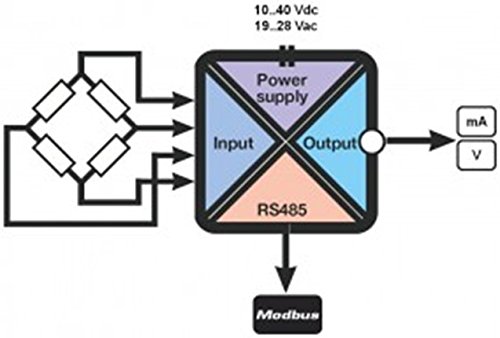
Figura 3: Functional block diagram illustrating the internal components and signal flow of the Z-SG module, including power supply, input, output, and Modbus communication.
3. Operazzjoni
Once properly installed and configured, the Z-SG module will convert the strain gauge signal into the specified analog output or transmit data via Modbus RTU.
3.1 Signal Conversion
The module continuously monitors the strain gauge input and converts the mV/V signal into a proportional analog current or voltage output, as configured. This output can then be read by a control system to monitor load or force.
3.2 Komunikazzjoni Modbus
For systems utilizing Modbus RTU, the module acts as a slave device, providing digital access to measured values and configuration parameters. Ensure your Modbus master device is correctly configured to communicate with the Z-SG module's address and baud rate.
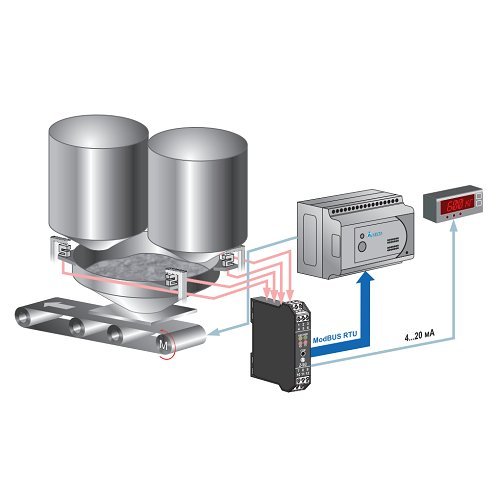
Figura 4: Example application diagram demonstrating the Z-SG module integrated into a weighing system, connecting load cells to a control unit via Modbus RTU and providing an analog output to a display.
4. Manutenzjoni
The Logicbus Z-SG module is designed for long-term, reliable operation with minimal maintenance. However, periodic checks can help ensure optimal performance.
- Spezzjoni Viżwali: Periodically inspect the module and its connections for any signs of physical damage, loose wiring, or corrosion.
- Kundizzjonijiet Ambjentali: Kun żgur li l-ambjent operattiv jibqa' fil-firxiet speċifikati tat-temperatura u l-umdità biex tevita ħsara prematura.
- Tindif: If necessary, gently clean the exterior of the module with a soft, dry cloth. Do not use harsh chemicals or abrasive materials.
- Kalibrazzjoni mill-ġdid: Depending on the application and required accuracy, periodic recalibration of the strain gauge system, including the Z-SG module, may be necessary. Refer to your system's calibration procedures.
5 Issolvi l-problemi
If you encounter issues with your Z-SG module, consider the following troubleshooting steps:
- Ebda Qawwa: Iċċekkja l-konnessjonijiet tal-provvista tal-enerġija u kun żgur li l-volumtage is within the specified range (10-40 Vdc or 19-28 Vac). Verify that the power indicator LED on the module is illuminated.
- Riżultat Żbaljat:
- Verify the strain gauge wiring for correct polarity and secure connections.
- Confirm the strain gauge is functioning correctly.
- Check the module's configuration via the RS-232 software to ensure the input range and output type are set correctly for your application.
- Ensure the receiving device (e.g., PLC) is correctly configured to read the analog output signal (current or voltagu).
- Kwistjonijiet ta' Komunikazzjoni Modbus:
- Verify RS-485 wiring, including termination resistors if necessary.
- Check the Modbus address and baud rate settings in both the Z-SG module (via configuration software) and the Modbus master device.
- Ensure the Z-PC-DINAL2-17.5 module, if used, is correctly installed and functioning.
- Observe the RX/TX indicator LEDs on the module for data transmission activity.
- Error Indicator (ERR LED): If the ERR LED is illuminated, consult the detailed product manual or contact technical support for specific error code interpretations.
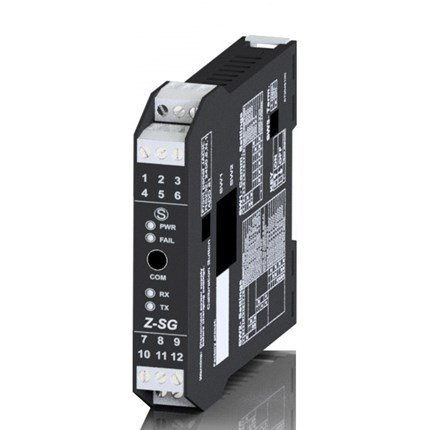
Figura 5: Ġenb view of the Z-SG module, highlighting the status LEDs (ERR, PWR, RX, TX, COM) which provide visual feedback on the module's operational status and communication activity.
6. Speċifikazzjonijiet
| Karatteristika | Valur |
|---|---|
| Numru tal-Mudell | Z-SG |
| Tip ta' Input | 1 input for 4 or 6-wire load cells |
| Medda tad-dħul | 1 ~ 64 mV/V (configurable) |
| Output Analog | Configurable: 0/4 ~ 20 mA or 0 ~ 5/10 Vdc |
| Riżoluzzjoni | 24-bit |
| Komunikazzjoni | Modbus RTU (requires Z-PC-DINAL2-17.5 for full functionality) |
| Provvista tal-Enerġija | 10 ~ 40 Vdc or 19 ~ 28 Vac |
| Dimensjonijiet tal-Prodott | 6.89 x 3.94 x 4.41 pulzieri |
| Piż | 4.94 uqija |
| Manifattur | Seneca (Brand: Logicbus) |
7. Garanzija u Appoġġ
For information regarding product warranty, technical support, or additional documentation, please contact Logicbus Inc. or visit their official websit.
Tista' ssib aktar informazzjoni u dettalji ta' kuntatt fuq Logicbus Store on Amazon.